Jump to a section
- How Many Miles Should Tyres Last? Tyres Lifespan Explained
- Factors Affecting the Mileage of Tyres
- How Long Do New Tyres Last? How to Know When to Change
- Signs Indicating That Your New Tyres Require Replacement
- How Often Should I Change My Tyres? A Guide to Tyre Replacement Frequency
- Extending the Lifespan of Your Tyres: Maintenance Tips for Longevity
- Virgo and Leo: Their Driving Styles and Effects on Tyre’s Lifespan
- Conclusion: When Is the Right Time to Replace Your Tyres?
Tyres are arguably one of the most critical components of the vehicle, affecting safety, performance, and efficiency. Awareness of how long tyres are supposed to last and what factors influence that lifespan will help you make informed decisions in maintaining and replacing tyres. But how long should a tyre last? Factors concerning this include driving habits, road conditions, and tyre quality.
This article will detail how many miles tyres ought to last on average, the general lifespan of new tyres, and the frequency with which they must be changed for their safety and optimum performance.
How Many Miles Should Tyres Last? Tyres Lifespan Explained
One of the frequently asked questions, “How many miles should tyres last?” is posed by many drivers. According to estimates, most tires last 25,000-50,000 miles, depending on the brand, driving conditions, and maintenance. However, the following factors influence this estimate further: road surface, driving style, and tyre composition.
Factors Affecting the Mileage of Tyres
- Tyre Quality and Brand: Generally, high-quality tyres from well-known tyre manufacturers usually last longer than cheaper options.
- Driving Habits: Aggressive braking, acceleration, and high-speed driving will shorten the life of a tyre.
- Road Conditions: Tyres wear faster on rough, uneven, or unpaved road conditions than smooth highways.
- Tyre Maintenance: Regular rotation, inflation, and alignment will significantly enhance the lifespan.

How Long Do New Tyres Last? How to Know When to Change
If you recently bought new tyres, you may have asked, “How long do new tyres last?” The answer is determined by the same factors identified above. In normal conditions, a new tyre that has been well looked after would typically last four to six years or until the tread wear indicator is reached.
Signs Indicating That Your New Tyres Require Replacement
- Tread Wear Indicator Bars: Newer tyres have tread indicator plastics to show when they’re too worn.
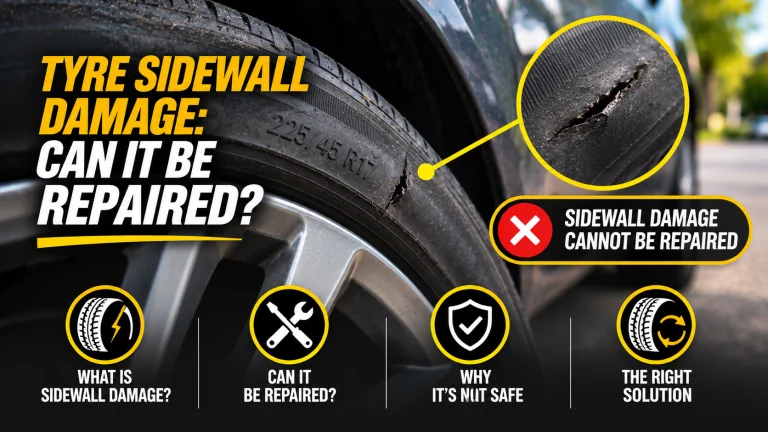
- Cracks and Bulges: Exposed damage to the sidewall or tread shows a deterioration point.
- Abnormal Vibrations and Noises: Excessive vibrations sometimes indicate uneven wear or alignment problems.
How Often Should I Change My Tyres? A Guide to Tyre Replacement Frequency
How often should I change my tyres for the sake of road safety? Manufacturers give mileage estimates, while worn conditions may call for replacement sooner than the indicated time.
General Guidelines for Tyre Replacement
- Inspect your tyres every six months for cuts, wear, and possible damage.
- Change tyres after four to six years, irrespective of tread depth, because of the degradation of rubber material.
- Periodically check the tread depth and replace if down to 2 mm.
- In case of severe damage like sidewall cracks or bulges, replace immediately.
One call and a fitter comes to the car
Home, work, roadside or car park, anywhere in London and across the UK. Tyres on board and balancing done on site.
20 to 30 min ETA in LondonCars, vans and luxury vehiclesOpen 24/7, seven days
Extending the Lifespan of Your Tyres: Maintenance Tips for Longevity
Being a wise driver means properly caring for tyres to maximise their lifespan. Here are crucial tips in extending the mileage of your tyre set:
Check Tyre Pressure Regularly: Underinflated or overinflated tyres lead to rapid wear and adverse vehicle handling.
Tyre Rotation: Rotate your tyres every 5,000 miles (8,000 km) or 6,000 miles (10,000 km) for even tread wear and thus longevity.
Ensure You Have Wheel Alignment: Misalignment results in uneven wear, which lowers the tire’s life.
Drive smoothly: Avoid any sudden braking or acceleration so as not to induce excessive wear.
Check Tyres for Damage: Occasionally, examine for punctures, cracks, or uneven tread wear.
Virgo and Leo: Their Driving Styles and Effects on Tyre’s Lifespan
Virgo Driver and Tyre Wear
Virgo drivers are detail-oriented and maintain a comprehensive approach in all their affairs. Their method of driving, which proceeds with caution and follows the rules to the last letter, conserves the natural life of their tyres because the drivers avoid aggressive driving, hard braking, and high-speed cornering. In addition to their scrupulous control of their tyre pressure and rotation, their tyres will likely live a long life.
Leo Driver and Tyre Wear
Leos are naturally more aggressive in their apprehension that driving in contrast with others is just another word for showing off their capabilities and roaring their cars up to speed, and this, naturally gives chase to the matter of speeding- it is their most significant stress on the acceleration and decrease through the braking system and the intermittences through cornering. Tyre wear through fast accelerations, hard braking, and sharp turns will soon be facilitated. On the other hand, Leos lavishes attention on their cars and usually selects superior-quality tyres that match the needs of performance in the prolonged life of their tyres.
Conclusion: When Is the Right Time to Replace Your Tyres?
The life of the tyres can vary in many respects, though one must understand how long a tyre should live and how many miles tyres should last to help make informed decisions. With consideration for reasonable maintenance procedures and regular checks, you will be able to thrive in life for as long as possible while guaranteeing the safest experience in your car.
Replace tyres when wear, damage, or diminished performance is evident. Good tyre maintenance is an investment in your car and safety.
For professional guidance and quality tyres, stick only with brands and service providers that inspire confidence in easily getting your vehicle down the road.
One call and a fitter comes to the car
Home, work, roadside or car park, anywhere in London and across the UK. Tyres on board and balancing done on site.
20 to 30 min ETA in LondonCars, vans and luxury vehiclesOpen 24/7, seven days