Jump to a section
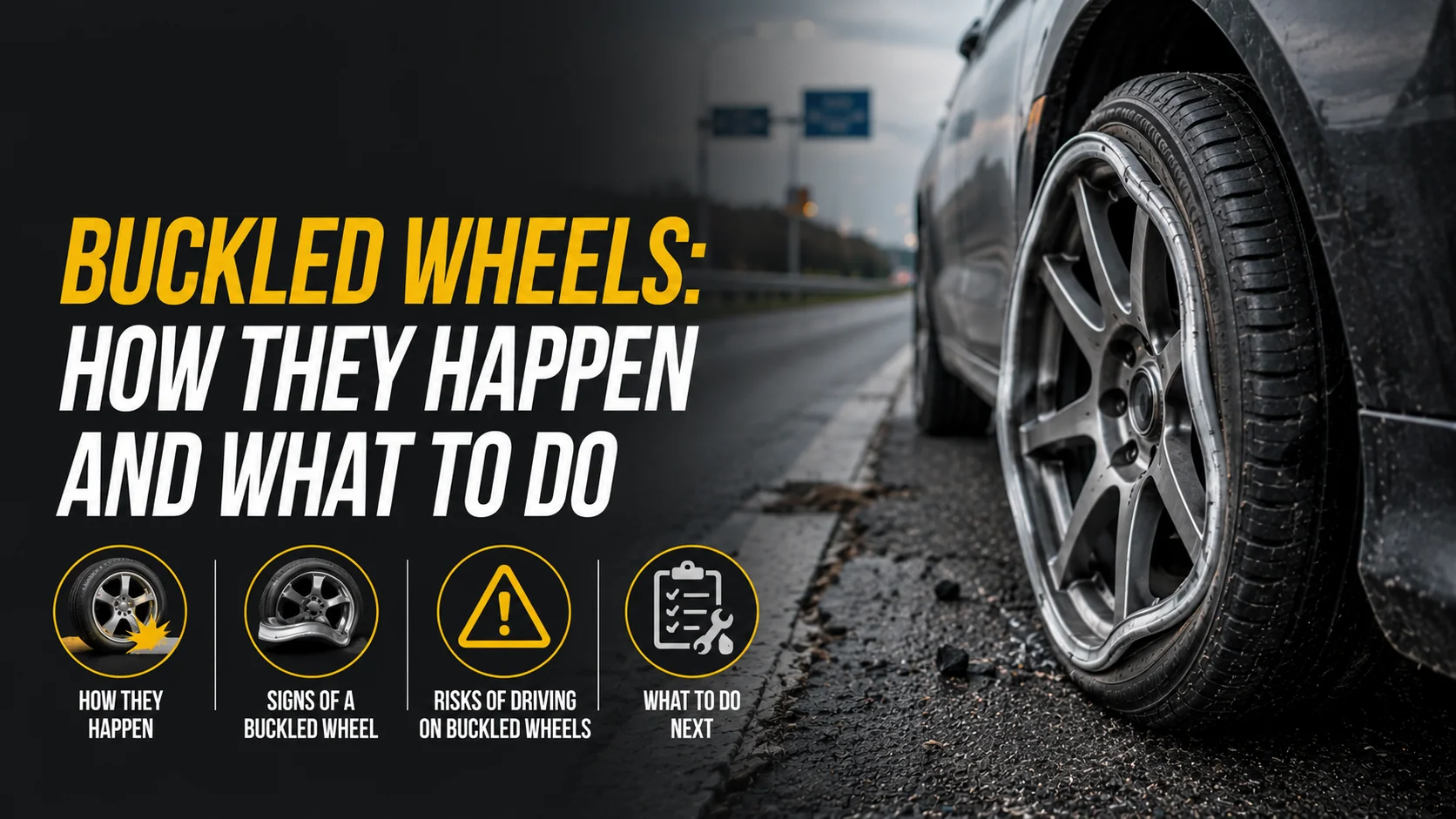
A buckled wheel is a wheel rim that has bent or deformed from its original round shape. It can happen to alloy wheels and steel wheels alike, and the result is usually the same: vibrations through the steering wheel, uneven tyre wear, and in some cases, a slow air leak that keeps deflating your tyre overnight.
Key Takeaways
| What it is | A wheel rim bent out of its true circular shape |
| Most common cause | Hitting a pothole at speed |
| Main warning signs | Steering vibration, uneven tyre wear, visible rim damage |
| Can you drive on it? | Minor buckles, yes (cautiously). Severe buckles, no |
| Repair or replace? | Mild bends on alloy wheels can often be straightened. Cracked or heavily deformed rims need replacing |
| Typical UK repair cost | £50 to £100 per alloy wheel for straightening |
What Actually Causes a Buckled Wheel?
The short answer: impact. Wheels are engineered to handle normal road surfaces, but they have limits. When the force of an impact exceeds the structural tolerance of the rim, the metal deforms.
Here are the most common causes, roughly in order of how often we see them.
Potholes are the number one culprit. The UK has a well-documented pothole problem. According to the RAC, pothole-related breakdowns hit around 29,000 in 2023. When your wheel drops into a deep pothole at 30 or 40 mph, the sudden impact compresses the rim between the road surface and the tyre. Alloy wheels, being more rigid than steel, are especially prone to cracking or bending on that kind of hit.
Curb strikes are the second biggest cause. Clipping a kerb while parking, misjudging a tight turn, or catching a raised manhole cover can all bend the outer lip of the rim. It doesn’t take a dramatic crash; even a moderate nudge at the wrong angle is enough.
Speed bumps taken too fast put similar stress on wheels. The impact loading on the rim increases significantly with speed, so what your wheel handles fine at 10 mph can cause a buckle at 25 mph.
Poor road surfaces in general, think uneven patches, exposed drain covers, and broken tarmac edges, contribute to gradual fatigue in wheel rims. A wheel that has absorbed dozens of minor impacts over thousands of miles can eventually develop a slight buckle even without one dramatic hit.
Underinflated tyres make all of this worse. A properly inflated tyre acts as a cushion between the road and the rim. When tyre pressure drops below the manufacturer’s recommended PSI, there is less air volume to absorb shock. The rim takes the brunt of every bump. This is why checking your tyre pressure at least once a month matters more than most drivers realise.
How to Tell If Your Wheel Is Buckled
Some buckles are obvious. You can see the bent or dented rim with your eyes. But many are subtle, just a millimetre or two of deviation from round, and those show up through symptoms rather than visual inspection.
Steering wheel vibration is the classic sign. If you feel a wobble or shimmy through the steering wheel, particularly at motorway speeds (60 to 70 mph), a buckled front wheel is a strong possibility. A buckled rear wheel tends to vibrate through the seat instead.
Uneven tyre wear is another giveaway. A wheel that is no longer perfectly round will cause the tyre to wear unevenly across the tread surface. If you notice one section of the tread wearing down faster than the rest, get the wheel checked.
Persistent slow puncture that keeps coming back after repair can sometimes trace back to a buckled rim. If the wheel’s bead seat (the flat area where the tyre seals against the rim) is bent, air escapes slowly through the gap. You top up the pressure, it drops again within days. That is a rim issue, not a tyre issue.
Visible damage on the rim itself, dents, flat spots, or lips that look warped, confirms it. Run your hand along the inner and outer edges of the rim (when the wheel is cool). You can often feel irregularities that are hard to see.
One thing worth noting: steering vibration can also come from an unbalanced wheel or worn suspension components. So vibration alone does not guarantee a buckle. A proper inspection, ideally with the wheel spinning on a balancing machine, gives a definitive answer.
Can You Drive on a Buckled Wheel?
It depends on severity.
A minor buckle, a slight bend that causes a mild vibration, is generally drivable at reduced speed for short distances. You should still get it sorted soon. Driving on a mildly buckled wheel accelerates tyre wear, stresses suspension components (wheel bearings, track rods, and ball joints), and can gradually worsen the buckle itself.
A severe buckle, one that causes heavy vibration, visible tyre wobble, or air loss, is not safe to drive on. At higher speeds, a badly buckled wheel can cause a tyre blowout, which is a serious safety risk. If the tyre is losing air, you could end up running on a flat and damaging the tyre beyond repair as well.
If you are unsure whether it is safe to continue driving, the safest option is to stop and have a mobile tyre repair technician assess it at your location.
Buckled Wheel Repair vs Replacement: Which Do You Need?
Not every buckled wheel needs replacing. Mild to moderate bends on alloy wheels can often be straightened using a hydraulic press by a specialist. The process involves heating the alloy to make it more malleable, then carefully pressing it back into shape.
Here is a rough guide:
| Damage Level | Alloy Wheel | Steel Wheel |
|---|---|---|
| Minor bend (1 to 2 mm deviation) | Usually repairable | Usually repairable |
| Moderate bend with no cracks | Often repairable by specialist | Often repairable |
| Cracked rim | Replace | Replace |
| Multiple bends or structural fatigue | Replace | Replace |
| Damage near spoke junction | Replace (structural risk) | N/A |
Alloy wheel straightening typically costs between £50 and £100 per wheel in the UK, depending on the severity and wheel size. Replacement alloy wheels range from around £80 for a budget aftermarket rim to several hundred pounds for OEM or premium brand wheels.
Steel wheels are cheaper to replace outright, often £30 to £60 per wheel. Because of the low replacement cost, straightening steel rims is less common.
A few things that make repair a bad idea: any visible cracking along the bend line, a wheel that has been previously repaired and buckled again (metal fatigue is cumulative), or damage in structurally critical areas like spoke junctions on alloy wheels.
When the wheel does need replacing, getting the right size, offset, and load rating matters. An incorrect replacement wheel affects handling and can interfere with braking components. If you need a tyre and wheel replacement sorted quickly, a mobile fitting service can bring the correct wheel and tyre to your location.
One call and a fitter comes to the car
Home, work, roadside or car park, anywhere in London and across the UK. Tyres on board and balancing done on site.
20 to 30 min ETA in LondonCars, vans and luxury vehiclesOpen 24/7, seven days
How to Reduce the Risk of Buckling a Wheel
You cannot eliminate the risk entirely, not while UK roads have potholes, but you can reduce it meaningfully.
Keep tyres at the correct pressure. This is the single most effective thing you can do. Check pressures monthly and before long journeys. Your vehicle’s recommended pressures are listed on a sticker inside the driver’s door frame or in the owner’s manual. Even 5 PSI below recommended reduces the tyre’s ability to cushion the rim from impacts.
Slow down for potholes and poor surfaces. Obvious advice, but worth repeating. Reducing speed from 40 mph to 20 mph before hitting a pothole roughly halves the impact force on the rim. If you spot a pothole too late to avoid it, try to avoid braking directly over it; braking shifts more weight onto the front wheels and compresses the suspension, reducing the cushioning available.
Avoid low-profile tyres if your roads are rough. Tyres with a lower sidewall height (35 or 40 profile) look sharp, but they provide significantly less cushioning than a 55 or 60 profile tyre. If you regularly drive on poorly maintained roads, a taller sidewall gives your rims better protection.
Inspect your wheels periodically. A quick visual check when you wash the car takes 30 seconds. Look for dents, scrapes, or warping on the rim edges. Catching a minor buckle early means a cheaper repair and less secondary damage to your tyres and suspension.
When to Get Professional Help
If you are experiencing persistent vibration, recurring slow air loss, or you have recently hit a significant pothole or kerb, it is worth getting the wheel inspected properly. A mobile tyre fitting technician can check the wheel on a balancing machine, assess whether it is repairable, and fit a replacement tyre or wheel on the spot if needed.
Buckled wheels are one of those problems that get worse the longer you leave them. The vibration stresses your wheel bearings, the uneven contact patch chews through tyre tread, and the buckle itself can deepen with continued driving. Sorting it early saves money and keeps the car handling the way it should.
If your wheel is buckled and you are in London, our mobile tyre fitting London team can come to you, usually within 20 to 30 minutes, and check the tyre on site.
Mobile Tyre Surgeons provides 24/7 mobile tyre fitting, repair, and replacement across the UK. If you suspect a buckled wheel or need a tyre inspection, call us.
One call and a fitter comes to the car
Home, work, roadside or car park, anywhere in London and across the UK. Tyres on board and balancing done on site.
20 to 30 min ETA in LondonCars, vans and luxury vehiclesOpen 24/7, seven days