
Jump to a section
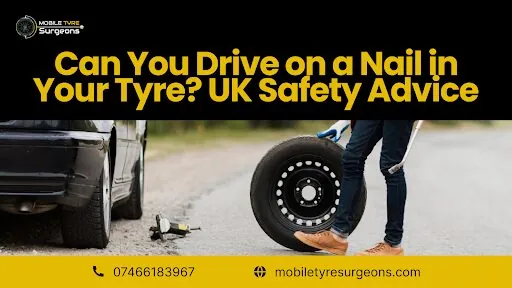
Found a nail in your tyre? Do not pull it out and do not carry on driving as normal. A nail can damage the inside of the tyre where you cannot see it, and the tyre can lose air without warning. Moving the car a very short distance at low speed to a safe place is the most you should do. In situations like this, mobile puncture repair allows the tyre to be inspected properly at your location, helping you avoid further damage and unnecessary safety risks.
Quick answer: Do not drive on a tyre with a nail in it if it is losing air. If the tyre is still holding pressure, drive only a very short distance, slowly, to a safe place. Do not pull the nail out. Have the tyre inspected the same day, because a nail can cause internal damage you cannot see.
Why a Nail in a Tyre Is a Serious Issue
Tyres are your vehicle’s only contact with the road. They support weight, maintain grip, absorb shock, and help you steer and brake safely. A nail puncture breaches the tyre’s structure and invites problems such as:
- Air loss and deflation
- Blowouts at speed
- Reduced grip and control
- Damage to tyre internal casing
- Uneven wear leading to handling issues
Even a small nail can cause internal damage that isn’t immediately visible but can grow worse over time, especially at higher speeds or over long distances.
Can You Drive on a Nail in Your Tyre?
In most situations where a nail is embedded and air is leaking, driving even a short distance can put you at risk.

Superficial vs. Penetrating Nails
- Superficial nails: These are shallow and may not have penetrated the inner tyre layers. They can sometimes be left temporarily if there’s no air loss, but this should be confirmed by a tyre professional.
- Penetrating nails: These puncture the tyre and cause air loss. In this case, driving even a short distance can quickly lead to a flat tyre or blowout.
The Risks of Driving on a Nail in Your Tyre
Here are a few risks listed if you drive on a nail in your tyre:
1. Rapid Air Loss
A nail in the tyre often creates an air leak that may seem minor at first. What starts as a slow puncture can quickly turn into a flat tyre, especially at motorway speeds or during hot weather when tyre pressure increases. In such situations, timely mobile tyre repair can prevent further damage, while mobile tyre fitting becomes essential if the tyre can no longer be repaired safely.
2. Tyre Damage
Driving on a deflating tyre can damage the internal structure, cords, and casing. This may mean the tyre cannot be repaired later and must be replaced, costing you more in the long run.
3. Loss of Control
A sudden tyre failure, at higher speeds, can cause loss of control, increasing the risk of accidents, especially on busy roads or in wet conditions.
4. Reduced Braking Performance
Even small punctures can affect braking distances and grip. This is especially dangerous in poor weather or emergency braking situations.
What You Should Do If You Discover a Nail in Your Tyre?
Here are the steps to follow if you discover a nail in your tyre:
Step 1: Pull Over Safely
As soon as you notice your tyre losing air pressure or see the nail, find a safe place to stop, ideally a lay by or quiet side road.
Step 2: Inspect the Tyre
Do not remove the nail! Removing it can make the air loss immediate and rapid. Instead, visually check if:
- The tyre is visibly losing air
- You can hear hissing
- The sidewall looks damaged
Step 3: Call a Professional Like Mobile Tyre Surgeons
This is where Mobile Tyre Surgeons come in. Instead of attempting to drive to a garage, call Mobile Tyre Surgeons and they will come to your location, whether that’s on the roadside, at home, or at work, and assess the tyre safely.
Mobile Tyre Surgeons can:
- Inspect the tyre thoroughly
- Repair the puncture if it’s safe to do so
- Replace the tyre if necessary
- Ensure your vehicle is safe to drive
How Mobile Tyre Surgeons Can Help You Safely
Instead of risking further damage by driving on a compromised tyre, Mobile Tyre Surgeons bring the service to you. You don’t need to worry about towing or driving on a slow leak, help comes to your car.
Expert Assessment
Not all punctures are the same. A professional technician will check:
- The exact location of the puncture
- Whether the inner liner is damaged
- If the tyre can safely be repaired
Some punctures are in repairable zones (the tread area), while others (such as the sidewall) are not safe to fix and require replacement.
Safe Repair or Replacement
Mobile Tyre Surgeons can:
- Plug or patch the tyre following industry‑approved methods
- Replace the tyre with a like‑for‑like equivalent if it’s unrepairable or unsafe
- Balance the tyre and complete a post‑service check
Mobility means less disruption and better safety, especially if you’re stuck on a busy road or during adverse weather.
Wondering how long it takes? See our guide on how long mobile tyre fitting takes.
How Far Can You Drive on a Punctured Tyre?
There isn’t a one‑size‑fits‑all answer, but here’s guidance based on common scenarios:
Slow Leak
If the nail is causing a slow leak:
- You may be able to drive a very short distance, ideally no more than a few hundred metres, to a safe stop.
- Driving further increases the risk of a sudden loss of pressure.
Rapid Air Loss
If the tyre is deflating quickly:
- Stop immediately and do not drive further.
- Call Mobile Tyre Surgeons for on‑site assistance.
No Air Loss Yet
If you find a nail but the tyre is still holding air:
- Still have the tyre checked as soon as possible.
- Some nails initially seal themselves but later cause problems once pressure changes with temperature.
Why You Shouldn’t Rely on Spare Wheels or Run‑Flat Tyres Alone
Some drivers think they can just use their spare wheel or run‑flat tyres and ignore the issue. Here’s why that’s not a safe long‑term plan.
Spare Wheels
Traditional spare wheels are often temporary and designed only to get you to a garage. They are not made for high speeds or long distances.
Run‑Flat Tyres
Run‑flat tyres allow short driving on low pressure, but:
- They still limit speed and distance
- They can be expensive to replace
- They need professional inspection after a puncture
Even with run‑flat tyres, a professional assessment, like Mobile Tyre Surgeons, is essential.
Common Myths About Driving on a Nail
Want to know the common myths about driving on a nail? Here we have listed a few:
Myth 1: “A small nail won’t hurt anything.”
Reality: Even small nails can penetrate deep and weaken internal tyre structure, best checked by a professional.
Myth 2: “I can just inflate the tyre and drive.”
Reality: Inflating a compromised tyre without fixing the issue can mask the problem temporarily but increases risk.
Myth 3: “If the tyre isn’t flat, it’s safe.”
Reality: Lack of visible deflation doesn’t mean the tyre is structurally sound. Internal damage could worsen quickly.
What Tyre Repair Experts Look For
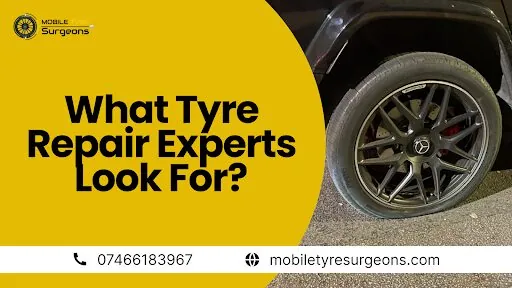
When a technician from Mobile Tyre Surgeons inspects the tyre, they consider:
1. Location of the Nail
- Tread area: Often repairable if conditions are right
- Shoulder or sidewall: Usually not repairable
- Near bead area: Complex repair situation
2. Size and Angle
Larger punctures and sharp angles can compromise the tyre’s internal structure.
3. Internal Damage
Technicians often remove the tyre from the rim to inspect the inner liner and casing.
4. Safety Standards
Safety is the priority, if a tyre cannot be repaired safely, it must be replaced.
How a Safe Tyre Repair Works
A professional puncture repair typically includes:
- Removing the tyre from the wheel
- Inspecting the interior for damage
- Cleaning and preparing the puncture site
- Applying a patch and plug from inside the tyre
- Balancing and remounting
- Final safety check
DIY tyre plugs or sprays should be considered only temporary fixes, they are not a replacement for a professional repair.
How Much Does It Cost?
Costs vary depending on:
- Whether the tyre can be repaired or must be replaced
- The size and type of tyre
- Additional services like balancing or new valves
With Mobile Tyre Surgeons, you pay for:
- Mobile call‑out and inspection
- Professional repair or replacement
- Peace of mind that the tyre is safe
Tips to Prevent Nail Punctures
While it’s not possible to avoid every nail or road debris, you can reduce your risk:
1. Regularly Check Tyre Pressure
Underinflated tyres are more prone to damage.
2. Inspect Tyres Frequently
Look for embedded objects, cuts, or irregular wear.
Fine cracks in the sidewall are a separate issue, see our guide on whether cracked tyres are safe.
3. Avoid Road Debris
Be cautious on poorly maintained roads and around construction sites.
4. Replace Worn Tyres Promptly
Old, worn tyres are more vulnerable to punctures.
What To Do In An Emergency Situation?
If your tyre is going flat rapidly and you’re still moving:
- Slow down gradually
- Avoid sudden braking or steering moves
- Exit the road safely
- Call Mobile Tyre Surgeons immediately
Do not try to drive at normal speed to your destination, the tyre can fail catastrophically.
For a full step-by-step guide, see our emergency tyre repair in London guide.
Final Words
Driving with a nail in your tyre might be tempting if you’re in a rush or believe the issue is minor. However, the risks, including blowouts, loss of control, and irreparable tyre damage, make it a gamble that’s simply not worth it.
Rather than putting your safety and others at risk, it’s best to have the issue checked and resolved properly. With professional mobile tyre fitting, Mobile Tyre Surgeons provide fast, expert assistance at your location, whether you’re stranded at the roadside, parked at home, or at work. We assess the tyre on the spot and carry out a safe repair or replacement without the need for a garage visit.
Your tyres are vital to your safety. Treat them that way.
If you are in London, our mobile tyre repair London team can come to you, usually within 20 to 30 minutes, and check whether the tyre can be repaired safely.
FAQ
Can I drive on a tyre with a nail in it?
Not if the tyre is losing air. Stop as soon as it is safe and do not drive further. If the tyre is still holding pressure, drive only a very short distance, slowly, to a safe place and have it inspected the same day. A nail can cause internal damage that you cannot see.
Should I pull the nail out of my tyre?
No. The nail may be plugging the hole and slowing the air loss. Pulling it out can deflate the tyre quickly. Leave it in place and call a technician to inspect and repair the tyre.
How far can I drive with a nail in my tyre?
If the tyre is leaking, only a few hundred metres to a safe stop, and ideally not at all. If it is holding air, keep the journey very short and slow. The safest option is to have a mobile technician come to you.
Can a tyre with a nail in it be repaired?
Often yes, if the nail is in the central tread area and the inner liner is undamaged. The tyre must be removed from the wheel and checked inside. A nail in the shoulder or sidewall usually means the tyre must be replaced.
Can you repair a nail puncture at my location?
Yes. Our technicians come to your home, workplace or roadside, inspect the tyre, and repair it if it is safe or replace it if it is not. Call 07466183967.
One call and a fitter comes to the car
Home, work, roadside or car park, anywhere in London and across the UK. Tyres on board and balancing done on site.
20 to 30 min ETA in LondonCars, vans and luxury vehiclesOpen 24/7, seven days